
Wow. I didn’t expect a browser extension wallet to feel this…comfortable. Really. At first it was just another tool to test; then it became the thing I open first when I’m about to sign a multi-chain trade. My instinct said “trust but verify,” and rabby wallet fit that vibe — practical, no-nonsense, with some neat under-the-hood features that actually reduce dumb mistakes.
Okay, so check this out—I’ve been deep in DeFi for years. I screw up sometimes. We all do. One bungled approval and suddenly you’re hunting across chains for what went wrong. My early impression was: another wallet, more options. But then I started using transaction simulation and things shifted. Initially I thought it was just a UX nicety, but then I realized simulation stops a lot of avoidable losses before they happen.
Small story, big lesson
Here’s a quick anecdote. I was setting up a liquidity position on a new chain. The UI was shiny. The gas estimates looked fine. My gut said “proceed”—and something felt off. I ran the simulation. The simulation flagged a potential token slippage path and an unexpected contract call. Whoa. I paused. I adjusted the slippage and re-routed the approval. Saved a chunk of capital. Simple, but very very important.
On one hand, many wallets show gas and approvals. On the other hand, few show an intent-level simulation that explains what a transaction will do before you hit confirm. Actually, wait—let me rephrase that: some wallets claim simulation, but rabby wallet makes it accessible during the flow, without forcing you to be a solidity expert.
What transaction simulation actually gives you
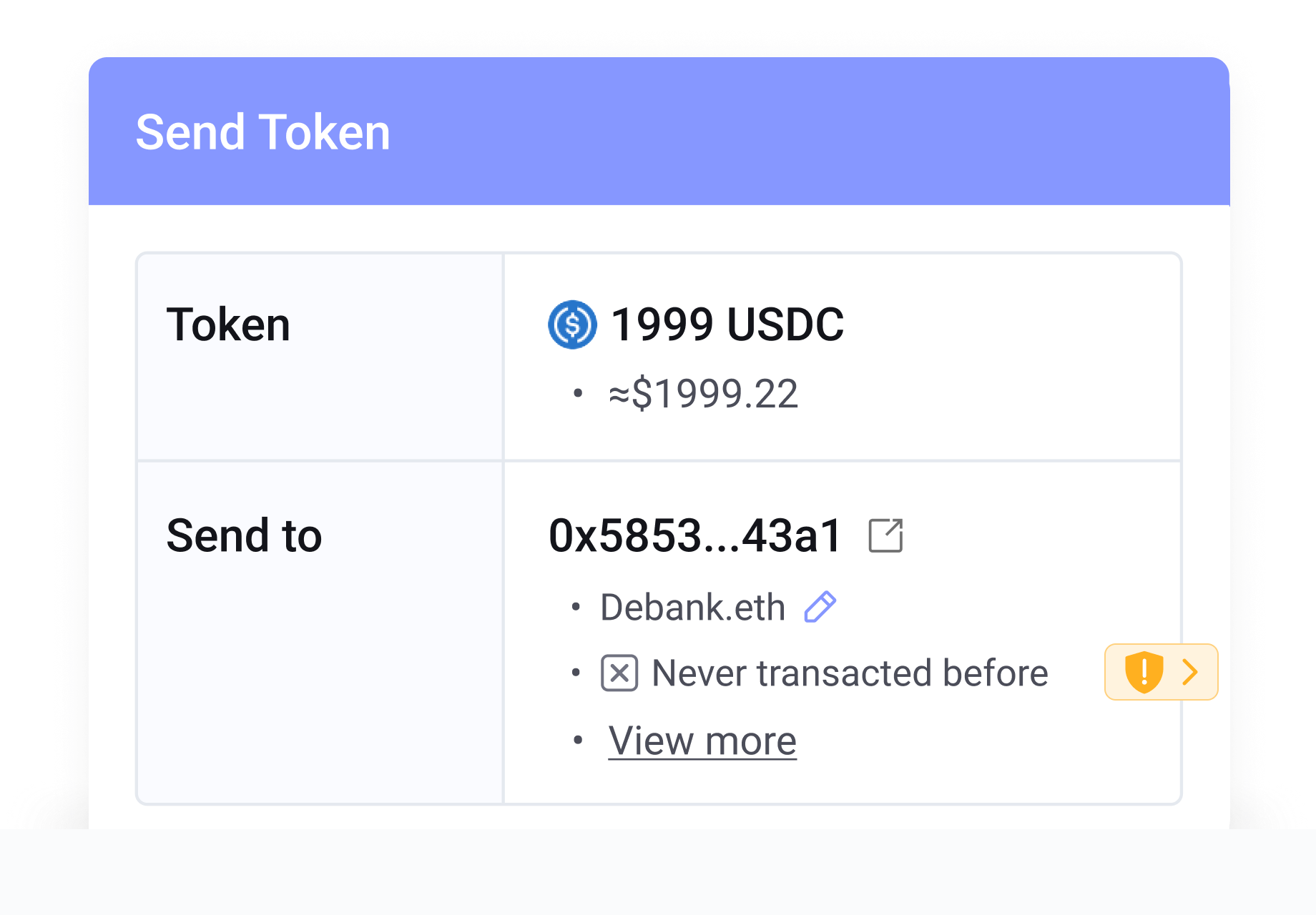
Short version: predictability. Medium version: you get a readable preflight that surfaces revert reasons, token transfers, and whether a contract may call other contracts. Longer thought: because DeFi interactions are composable and often opaque, a pre-execution model reduces surprises; it forces you to consider the “what ifs”—what if token A gets front-run, what if allowance does something weird, what if a contract calls a harmful router—before you sign.
My process has changed. Now I run sim first, skim the call graph, and only then confirm. It’s become reflexive. Hmm… it sounds rigid, but it’s actually liberating. I can move faster because I fail less.
Rabby’s multi-chain flow — why it matters
DeFi isn’t just Ethereum anymore. You’ve got ARB, OPT, BSC, Polygon, chains I’ve barely tested. Wallets that shoehorn every chain into one UI usually leak nuance: different gas behaviors, different contract patterns, different bridge traps. Rabby wallet handles multi-chain contexts without pretending they’re identical. The extension is lightweight, and switching chains doesn’t feel like playing whack-a-mole.
And here’s a practical bit: if you’re bouncing between networks, the simulation helps you catch mismatched token addresses or approvals that would otherwise bounce. I once tried to bridge a token and approve the wrong contract on the target chain—cost me a snack-sized fee and then a facepalm. Rabby made that kind of error rarer for me.
Security posture — pragmatic, not paranoid
I’ll be honest: I’m biased toward tools that respect developer transparency. Rabby wallet shows what contracts are being called, and when it doesn’t understand something it doesn’t hide it. That kind of posture matters. It doesn’t promise bulletproof security; rather, it empowers you to make choices with more context.
Something else bugs me about many wallets: approvals management is clunky. Rabby gives clearer controls over allowances and a tighter UI for revoking. Tiny detail, big payoff. On a day-to-day basis, those little UX wins compound.
Flow: from discovery to habit
At first I tried rabby wallet out of curiosity. Then I used it for simulations only. Then it became my default for trades I couldn’t afford to mess up. The learning curve is small—no deep dives into the dev console required—but the benefit is immediate. On deeper reflection, that incremental trust is how tools earn their place in a pro’s toolkit.
There are limits. I’m not 100% sure about every simulation edge-case—flash-loan attacks, complex sandwich strategies, or novel bytecode obfuscations can still outsmart heuristics. Rabby reduces a lot of common risk, but it doesn’t replace vigilance. So: use the simulation as an important filter, not a guarantee.
How I use rabby wallet in practice
Workflow snippet—short, practical:
1) Prepare the trade or contract call off-site (DSL or Dapp). 2) Open rabby wallet and inspect the transaction preview. 3) Read revert reasons or call traces if flagged. 4) Adjust parameters (slippage, gas, recipient). 5) Confirm. 6) Post-trade: check allowance and revoke if it was a one-off. It sounds procedural, but after a few uses it becomes fast.
On a tactical level, simulation saved me from signing a permit that routed through an unfamiliar proxy. On a strategic level, it gave me confidence to experiment without the same dread of hidden callbacks. That freedom to experiment is underrated.
Where rabby wallet can improve
Not everything is perfect. The simulation sometimes shows too much raw data for non-technical users, and other times it glosses over nuance only an auditor would catch. Also, cross-extension interactions are still a messy world—no single wallet can fix ecosystem-wide UX fragmentation alone. But incremental improvements here would boost adoption for power users and newcomers alike.
I’m also curious how they plan to handle increasingly complex MEV-aware simulations. On one hand, it’s great to know if you’ll be frontrun. Though actually, modeling all real-time on-chain actors is thorny and will probably never be 100% accurate. Still: the direction is right.
Where to get it
If you want to try it yourself, here’s the link I use and trust: rabby wallet. Install it as a browser extension, poke around the simulation previews, and try a small test trade to see the flow. (Oh, and by the way… always test with a small amount first.)
FAQ
Is transaction simulation foolproof?
No. Simulation reduces common mistakes and surfaces many attack vectors, but it can’t predict every MEV move or exotic exploit. Use it as a strong filter, not as absolute proof of safety.
Will rabby wallet replace my hardware wallet?
Not really. For high-value custody, hardware wallets remain the gold standard. rabby wallet pairs well with hardware devices for signing, giving you simulation benefits while preserving cold-key security.
Does simulation slow down the flow?
Minimal latency. The extra millisecond or two is worth the reduced odds of costly mistakes. If you’re doing high-frequency market-making, of course you’ll account for that; for most DeFi use-cases it’s negligible.